How to Keep Kids Safe from Dog Waste Risks

Dog waste can make kids sick, even when you can’t see it. I’d keep risk low with four steps: separate the potty area from play space, pick up waste often, make shoes and handwashing a rule, and watch for signs of illness after contact.
A single gram of pet waste can contain about 23 million fecal coliform bacteria. Dog waste can also spread roundworms, hookworms, Giardia, E. coli, and Salmonella. For kids, the main trouble spots are yards, sandboxes, patios, parks, and any place they play close to the ground.
Here’s the short version:
- Set a dog potty zone far from swing sets, sandboxes, pools, and play gear
- Scoop daily if you can, or at least 3–4 times per week
- Keep sandboxes covered when not in use
- Make kids wear shoes outside
- Wash hands with soap and water for 20 seconds after outdoor play
- Call the pediatrician if your child has diarrhea, vomiting, stomach pain, fever, skin tracks, or eye symptoms after exposure
If I had to boil the whole article down to one line, it would be this: keep dog waste in one place, remove it fast, and keep kids’ hands and feet away from it.
Set Up Your Backyard to Keep Play Areas Away From Potty Areas
Now take that safety rule and turn it into your yard layout. A smart setup helps cut exposure and keeps waste away from the places where kids run, dig, and play.
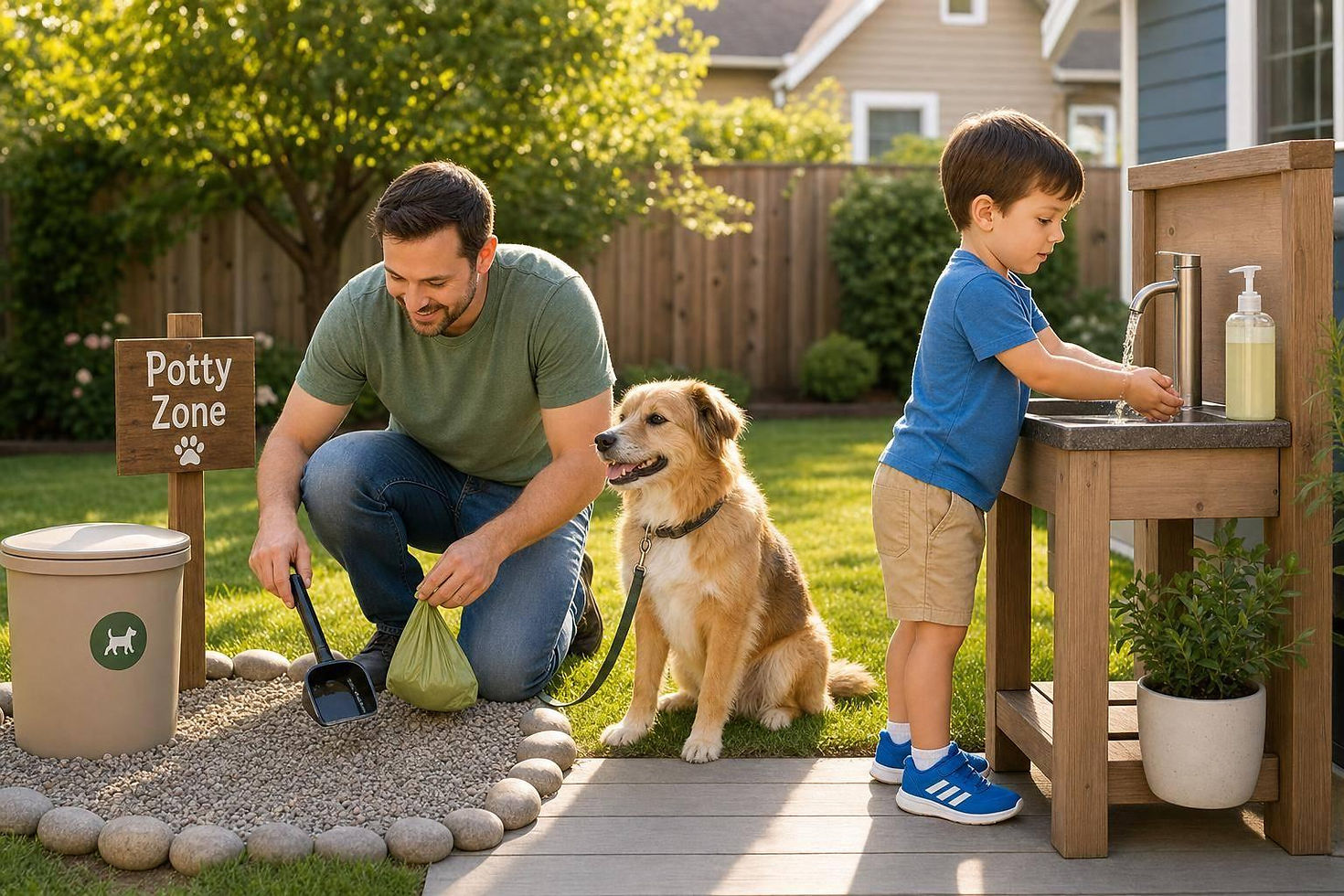
Create a Dog Potty Zone Away From Play Equipment
Choose a corner or edge of the yard that's as far as possible from swing sets, trampolines, kiddie pools, sandboxes, and garden beds where kids dig or help plant. If your yard is small, don't worry - even a steady 4-by-6-foot corner can help limit the spread of contamination.
Try to place the potty zone downwind from seating and play areas. It should also sit downhill from play spaces so runoff moves away from kids, not toward them. Mark the area with a short fence, edging, or planters. If you have toddlers, a gate can help keep them out without making cleanup harder. Once that spot is set, daily pickup gets a lot simpler.
Choose Surfaces That Are Easier to Keep Clean
Use pea gravel, washed river rock, or decomposed granite. These surfaces drain better and make waste easier to see and remove. Skip loose sand, deep mulch, and leaf piles - they tend to hide waste and make cleanup more of a chore.
In the rest of the yard, keep the grass cut short so missed waste stands out instead of blending in. Clear away standing water too, since puddles can spread contamination.
Sandboxes need extra care. Keep them covered with a fitted, secure lid any time they aren't being used, and don't let dogs in them at all. Studies have found Toxocara eggs in sandbox sand samples. A cover that a curious dog can't nose aside is the simplest way to protect the sandbox.
Shared Yard vs. Separated Yard: A Side-by-Side Comparison
This choice changes both safety and upkeep.
Factor | Fully Shared Yard | Yard with Designated Potty Zone |
Child Safety | Higher risk; waste and parasites can be anywhere kids walk, sit, or play | Lower risk; pathogens stay in one clearly marked, non-play area |
Cleanup Effort | High; you have to scan the whole yard to find hidden waste | Lower; waste stays in one area and is easier to find and remove |
Practical Drawbacks | Odors, pests, and surprise messes near play equipment; extra shoe cleaning | Needs dog training and some setup cost for fencing or gravel |
With the yard divided, the next step is keeping waste from piling up.
Cleanup Routines That Prevent Waste Buildup
Once you’ve set up a potty zone in the yard, the next step is simple: don’t let waste sit there. Cleanup frequency matters more than many parents think.
Remove Waste Often and Store Tools Safely
Removing waste every day helps limit parasite eggs and bacteria. If that’s not doable, scoop 3–4 times a week, which matters even more in smaller yards or spaces your dog uses a lot.
A steady routine works best. Wear disposable gloves each time. Scoop waste straight into a thick plastic bag, tie it shut, and put it in a lidded outdoor trash can with a liner for normal curbside pickup. Don’t put dog waste in backyard compost. Parasite eggs can survive at the temperatures most home compost piles reach, then end up back in the soil where kids play or dig. When you’re done, wash your hands with soap and water for at least 20 seconds.
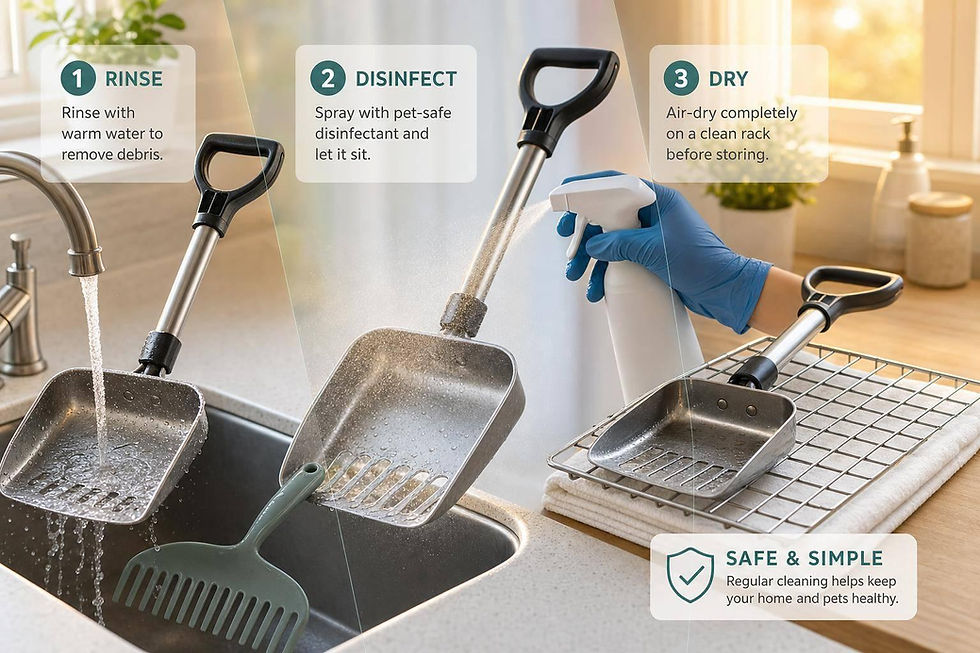
Store scooping supplies - like a long-handled scooper, a small rake, and spare bags - in a closed shed, garage, or locked deck box. Label them clearly and keep them fully separate from garden tools or anything used near a sandbox. Rinse tools away from play areas, then disinfect them with a bleach mix that’s safe for the tool material. Let them dry all the way before putting them back.
Use Yard Treatments When Extra Sanitation Is Needed
Regular scooping handles most of the problem. Still, there are times when a deodorizer or surface treatment helps, like after you’ve missed a few cleanups, after your dog had diarrhea and the mess didn’t come up cleanly, or when a small potty zone still smells bad even after a careful scoop.
Hard surfaces - patios, pavers, and artificial turf - can also use an occasional wash with a pet-safe cleaner and a scrub brush. Visible waste may be gone, but tiny residue can still stick around.
If you use a deodorizing treatment, keep kids and pets inside until the area is completely dry. That can take 30 minutes to a few hours, depending on humidity and the product. These treatments help after cleanup. They don’t replace scooping, and they won’t kill parasite eggs in soil.
When to Consider a Scheduled Cleanup Service
If keeping up with scooping is hard, Doody Bug Poop Scooping offers weekly, twice-weekly, and one-time cleanup, plus deodorizing treatments, in the greater Houston and Tomball area. A deep clean can reset the yard, but you’ll still want to get back to a steady removal schedule afterward.
Cleanup Option | Consistency | Child-Safety Benefit | Parent Effort |
Daily self-scooping | High if maintained | Strong - prevents parasite and bacteria buildup when done consistently | Moderate to high - daily time, gloves, tools, and trash handling |
Scheduled professional cleanup | High - set schedule reduces missed weeks | Significant - reliable removal plus sanitized tools add extra hygiene | Low - hands-off between visits |
One-time deep cleanup | Low - single event | Moderate - resets a heavily contaminated yard to a safer baseline | Minimal - prep and scheduling only |
Next, make the rules simple for kids: stay out of potty areas, wear shoes, and wash hands after play.
sbb-itb-1f9eab4
Teach Kids Simple Outdoor Hygiene Rules
Once the yard is clean, the next job is making the safety rules automatic. Scooping helps a lot, but kids still need plain, easy-to-follow habits so they stay away from waste spots and wash up after play.
Set Clear Rules for Playing Near Dog Areas
Keep the rules short and concrete so kids can remember them. The main ones are simple:
- Never touch dog poop
- Tell an adult right away if you see waste near the play area
- Stay out of the dog potty zone - no running through it, no toys there, and no digging
For younger kids, use very simple words. For older kids, add a bit more detail so they know why the rule matters. Visual cues can help too. Edging, colored flags, signs, or a different ground cover in the potty zone gives kids a clear signal about where they shouldn't play.
Require Shoes and Handwashing After Outdoor Play
There are two rules that shouldn't be optional: wear shoes outside and wash hands when you come in. Closed-toe shoes or sturdy sandals on grass or dirt help protect bare skin from hookworm larvae and help keep fecal bacteria off feet.
Make it part of the routine. Shoes go on before the door opens, and they come off at the entry when kids come back inside. If the soles look dirty, or if a child walked through the potty zone, clean them before they track anything indoors.
After outdoor play, the last step is always handwashing. Use soap and running water for at least 20 seconds. Wash the front and back of the hands, between the fingers, and under the fingernails. This matters even more before eating or having a snack, since that's when kids are more likely to put their hands near their mouths.
Use hand sanitizer only until soap and water are available.
If a child may have touched waste, watch for symptoms next.
Watch for Symptoms and Follow a Simple Safety Plan
Even if you stay on top of cleanup, it still makes sense to watch for symptoms after any possible exposure.
When to Call the Pediatrician After Exposure
Call your pediatrician if your child has persistent diarrhea, vomiting, stomach pain, or a persistent fever.
You should also get prompt care if your child has crawling skin tracks on the feet or hands, eye pain, redness, blurred vision, or vision loss in one eye. Eye symptoms need prompt care.
When you call, share the details that can help your pediatrician piece things together:
- Any dog exposure
- Your dog's vet care and deworming
- How often you clean up waste
- Whether your child played barefoot or touched dirt in dog areas
Key Steps to Keep Kids Safer Outdoors
To keep risk low, stick with a few simple habits every day: separate play and potty areas, scoop often, wash hands after outdoor play, and call for care when symptoms show up.
If regular scooping is hard, Doody Bug Poop Scooping offers weekly, twice-weekly, and one-time cleanup in the greater Houston and Tomball area, plus deodorizing treatments.
FAQs
How long can dog waste germs stay in a yard?
Dog waste can leave a yard risky long after the mess is out of sight. The stool itself may take up to a year to break down, and the germs it carries can stick around even longer.
That’s what makes contaminated soil such a stubborn health problem. Even when the waste seems gone, the danger may still be there.
Some of the longest-lasting threats include:
- Roundworm eggs, which can stay infectious for years
- Hookworm larvae, which may survive in soil for long periods
- Whipworm eggs, which can also persist
- Parvovirus, another pathogen that can remain in the environment for an extended time
In plain terms, one missed cleanup can affect a yard for far longer than most people expect.
What should I do if my child touches dog poop?
Have them wash their hands well with soap and water for at least 20 seconds as soon as they can. That’s the main step for helping stop germs from dog waste from spreading.
If you’re worried about infection, or your child develops skin irritation like itchy, red tracks, talk to a healthcare professional.
How can I keep a small yard safer for kids and dogs?
Prioritize frequent, consistent waste removal to help disrupt the parasite life cycle and cut down on bacterial buildup. In a small yard, clean up at least every 2 to 3 days. If the weather is hot and humid, do it daily.
A designated, easy-to-clean potty area can make this much simpler. It helps keep waste contained in one spot instead of spreading across the yard. Use durable bags or sanitized tools, then throw the waste away in a sealed outdoor bin.


Comments