
5 Steps for Spring Dog Poop Cleanup

Dog poop left through winter can turn into a muddy, bacteria-filled mess fast. I’d clean it up before spring rain, use a simple 5-step plan, and bag everything for the trash right away.
Here’s the short version:
Step 1: Walk the yard and clear leaves, sticks, and surface debris
Step 2: Get gloves, bags, boots, and a scooper ready first
Step 3: Scoop in a grid so I don’t skip spots
Step 4: Bag waste tightly and put it in a lidded trash can
Step 5: Wash tools and treat smell-heavy areas
A few facts make this job worth doing now:
Roundworm eggs can stay in soil for up to 4 years
1 gram of dog waste can carry up to 23 million fecal coliform bacteria
Wet ground makes pickup more messy because waste mixes into mud fast
Quick Comparison
Step | What I do | Main goal |
1 | Clear debris and check fence lines, corners, and shrubs | Make hidden waste easy to see |
2 | Gather gloves, scooper, bags, boots, and trash can | Keep cleanup clean and simple |
3 | Work yard in zones with overlapping passes | Miss fewer piles |
4 | Double-bag if needed and trash it right away | Cut leaks, smell, and pests |
5 | Clean tools and spray odor spots | Cut germs and leftover smell |
Bottom line: if I handle the yard in this order, the job is less messy, the lawn is easier to use, and the next cleanup takes less time.
sbb-itb-1f9eab4
Step 1: Walk the yard and clear surface debris
Before you grab a single bag or scooper, walk the whole yard. That first pass helps you spot where your dog usually goes and where waste may be tucked under winter debris. It also gives you a chance to notice uneven ground, muddy patches, or holes before you start.
Begin at the back door, then follow the perimeter first: fence lines, sheds, and planting beds. After that, work your way inward. As you move, pick up branches, sticks, and loose debris and toss them into a yard bag. Then use a leaf rake to lift leaf piles along fences and in corners. If the turf is damp, rake lightly so you don’t tear up soft grass. The whole point here is simple: expose any hidden waste.
Check high-traffic and hidden spots first
Most dogs go back to the same areas, so waste usually piles up in familiar spots. Fence lines and corners tend to be the heaviest zones because dogs like to mark along boundaries and often feel more at ease there. Gates and entry points are another common trouble spot. A lot of dogs eliminate soon after they enter the yard.
It’s also worth checking along the base of decks, behind shrubs, and next to storage units or air-conditioning equipment near the edge of the yard. These tucked-away areas usually trap the most leaves and sticks too.
If a spot is shaded or cramped, use a flashlight so you can see clearly. Once you’ve cleared and checked those hidden zones, move to Step 2.
Step 2: Gather your gloves, tools, bags, and boots
Once the yard is clear, get your cleanup gear together before you start. That saves time, keeps things moving, and makes the whole job less messy.
You need five basics: gloves, a sturdy pooper scooper, heavy-duty waste bags, waterproof boots or closed-toe shoes, and a lidded outdoor trash can. Gloves help keep cleanup hygienic and make disposal simpler. When everything is within reach, it's much easier to move through the yard in a steady way and avoid missing waste tucked into the grass.
For the scooper, use a long-handled rake-and-tray or rake-and-bin model with 30–36-inch handles and a metal head if you're dealing with soft, wet waste. For bags, stick with heavy-duty waste bags. Then toss everything into a lidded outdoor trash can to help control odor and keep pests away until trash pickup day.
Match your setup to your yard size
Pick your setup based on the size of the space:
Small yards: a handheld setup
Medium yards: a long-handled scooper
Large yards: a wheeled container
With your gear ready, Step 3 is to clean section by section in a grid.
Step 3: Scoop in a grid pattern so you don't miss spots
Now that your gear is set, don't bounce from pile to pile. Work the yard in a clear pattern instead. Use the gear from Step 2 and make straight, parallel passes across each part of the yard so every area gets a visual check. That's especially helpful after winter, when melting snow and freeze-thaw cycles can hide waste in patchy grass, mud, and leaf debris.
Break the yard into 3–6 zones using fence lines, patio edges, garden beds, or a play area.
When you spot a pile, place the tool flat beside it, slide underneath, and lift in one motion. Try not to jab straight down into soft ground. That can smear waste into the grass. Then finish each zone with overlapping passes so you don't leave gaps behind.
Work one section at a time
Start at one edge and walk in straight, overlapping rows. Scan about 2–3 feet on each side, then move over roughly 2 feet and come back on a parallel line. That little bit of overlap helps cover the spots that are easy to miss.
Before you leave a zone, do a quick perimeter pass along:
fence lines
paths
shrubs
trees
corners
Dogs often favor those areas, so waste may be more packed there than out in the open lawn. It also helps to stop and look back from the opposite angle. A pile that blended in on the first pass can suddenly stand out. Then move your bag or bucket to the next zone.
Step 4: Bag waste tightly and put it in the trash
Once you've cleaned a zone, bag the waste right away and take it straight to the trash. As you go, put each pile into a bag and each bag into the trash bin - never into garden beds or compost.
Think of dog waste as contamination, not compost. If it sits in the yard, it can harm grass and spread bacteria into the soil.
To seal a bag well, press out the air and tie a double knot. If the waste is heavy or wet, use two bags to help stop leaks. Also, stop when the bag is about two-thirds full. Overfilled bags are more likely to tear or spill when you carry them.
Keep bags sealed and contained until pickup day
After you seal each bag, place it in a lidded outdoor trash bin and keep the lid fully closed. That helps keep out raccoons, neighborhood dogs, and other animals. Set bags upright so the knots stay sealed, and don't pile them so high that the lid can't shut all the way.
If trash day is still a few days away, try to do your spring cleanup close to pickup day. In warm areas, it also helps to keep the bin in the shade with the lid shut tight so odors don't build up.
Wash your hands after the cleanup, then move on to cleaning your tools.
Step 5: Clean your tools and treat odor-prone spots
Clean your tools before you put them away. That helps keep bacteria and parasite eggs from getting tracked back into your yard - or worse, into the house.
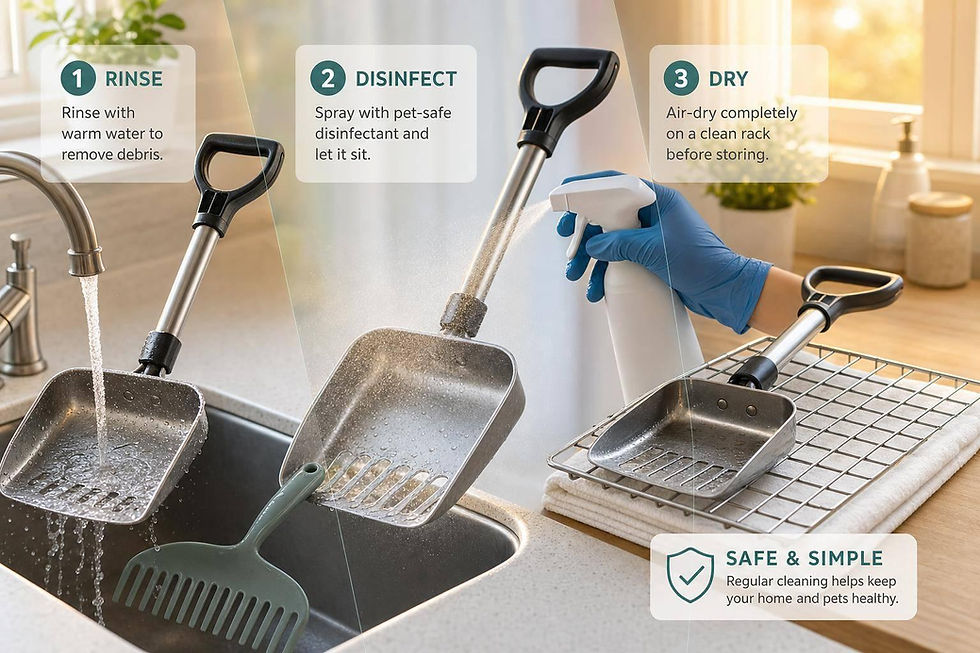
First, wipe off any visible mess with a disposable paper towel. Then scrub scoops and rakes with warm water and a mild detergent. For boots and reusable gloves, pay close attention to the soles and other high-contact areas. Wash them with soapy water, then disinfect with a diluted bleach mix at about a 1:32 bleach-to-water ratio or use a pet-safe disinfectant spray. Rinse everything well, let it air-dry, and store the clean gear in a dedicated outdoor bin or cleanup station away from your everyday stuff.
Once the tools are clean, deal with the spots where waste sat all winter. The usual trouble areas are corners, fence lines, and the space near the back door. On a dry day above freezing, apply a pet-safe enzymatic cleaner to those zones with a hose-end or pump sprayer. Keep pets off the area for 30–60 minutes until it dries. If heavy-use spots still smell, apply it again.
When to bring in professional help
If the cleanup is too big to handle in one pass, it may make sense to call in help. Doody Bug Poop Scooping serves homeowners in the greater Houston, Tomball, and surrounding areas with one-time seasonal cleanups and scheduled service.
Conclusion: A cleaner yard in 5 steps
After Step 5, you're done: the yard is clean and ready for spring.
Spring cleanup takes a full sweep, not a quick once-over. These five steps take a messy yard and turn it into a space that feels clean, safer, and much easier to use.
Follow them in order, and the payoff is clear: less odor, fewer flies, and a yard that's better for kids, guests, and your dog.
And there’s another upside. A clean yard now makes the next cleanup much faster and easier.
If the job feels like too much to handle on your own, Doody Bug Poop Scooping offers one-time cleanup, recurring service, and yard deodorizing in greater Houston and Tomball. A little work now can keep your yard fresher and easier to maintain all season.
FAQs
When is the best time for spring dog poop cleanup?
The best time for spring dog poop cleanup is early in the morning, when temperatures are cooler and, if possible, before it rains.
If the winter buildup feels like a lot, Doody Bug Poop Scooping offers one-time yard cleanups in the greater Houston and Tomball areas to help you start the season fresh.
Can dog poop damage my lawn or soil?
Yes. Dog waste can damage your lawn and soil.
It’s highly acidic and loaded with extra nitrogen and phosphorus. That mix can burn grass, leave yellow or brown spots, and throw off the health of your soil.
It can also leave harmful pathogens and parasites behind, including E. coli, Salmonella, and roundworms. Those can stay in the soil and create health risks for both your family and your pets.
Should I hire help for a large yard cleanup?
Yes. Professional help makes sense when a big yard or regular cleanup starts to feel like too much to handle, especially if you have multiple dogs or a packed schedule.
In the greater Houston and Tomball areas, Doody Bug Poop Scooping offers weekly, twice-weekly, and one-time cleanups, along with deodorizing treatments, to help keep your yard clean, safe, and fresh.


Comments