
Can Gravel Work for Dog Potty Areas?

Yes, gravel can work for a dog potty area. I’d start with washed, rounded pea gravel 1/4 to 3/8 inch wide, good drainage, and daily scooping - not stone alone.
Here’s what I’d check before installing it:
Your dog’s comfort: Try a small patch first. Skip loose gravel if your dog chews or swallows stones, and provide shade in Houston’s heat.
The ground underneath: Plan the gravel depth around your soil and base, with a 1%–2% slope away from buildings. Keep dirty runoff away from neighbors and storm drains.
The cleanup routine: Scoop at least daily, rinse only when water drains well, and use a pet-safe cleaner labeled for gravel if odors linger.
My rule: <u>choose for paws, plan for drainage, and clean for odor control</u>. Gravel can cut down on mud, but it’s not maintenance-free.
How to build a dog potty area outside on your lawn
sbb-itb-1f9eab4
Choose the Right Gravel for Dogs
Choose washed, rounded pea gravel about 1/4 to 3/8 inch wide. Skip batches with sharp fragments, construction debris, or dust and fines.
Pea Gravel vs. Decomposed Granite vs. Crushed Rock
Judge the finished surface, not just the product name. Drainage depends on the soil, slope, and base underneath, and no gravel type prevents odor on its own. Put safer footing and easier scooping ahead of looks.
Material | Paw comfort | Drainage | Odor control | Stability | Cleanup |
Washed, rounded pea gravel | Usually gentle on pads | Drains over a suitable base | Needs regular cleaning | Shifts underfoot | Waste can lodge between stones |
Decomposed granite | May be abrasive | Compacted fines slow drainage | Fines may retain urine | Compacts firmly | Loose particles track indoors |
Angular crushed rock | Sharp edges may irritate | Depends on grading and base | Does not prevent odor | Interlocks to resist movement | Difficult to rake |
Once you’ve narrowed your choice, let your dog try a small patch before covering the whole area.
Check Paw Comfort and Stone-Chewing Habits
Start with a 2-by-2-foot test section. Keep visits short and supervised, reward calm standing, and leave another potty spot available for the first few days. Check between your dog’s toes afterward. Hesitation, repeated paw lifting, licking, redness, or limping means the surface is too rough. Puppies, senior dogs, and dogs with arthritis may need steadier footing.
Avoid loose gravel if your dog chews or swallows stones. Small rocks can cause choking or intestinal blockage. Contact your veterinarian promptly if your dog swallows a stone, especially if vomiting, abdominal pain, loss of appetite, or trouble passing stool develops.
Watch the heat, too, particularly in direct sun. In Houston heat, choose light-colored stone and provide shade. Hold the back of your hand against the surface for 7–10 seconds. If it feels hot, move your dog to a cooler spot.
Plan the Gravel Depth and Base
Once you’ve chosen your gravel, plan the depth and drainage. Allow 4 to 6 inches of excavation and 2 to 4 inches of finished pea gravel. Adjust these depths for the soil, traffic, dog size, and final grade. A properly prepared base helps water drain, cuts down on mud, and keeps gravel from shifting out of place.
Prepare the Soil and Base
Remove grass, roots, weeds, and soft topsoil. Then level and firm the subgrade. Keep the finished surface slightly below nearby edges, or add a border to hold the gravel in place.
For soft ground or areas that get heavy use, install a permeable aggregate base, compacting it in layers. Well-drained soil may not need a separate base. If water stands on the site, address the drainage first.
Use permeable landscape fabric only to separate soil from stone. Avoid plastic sheeting, which can trap urine and rainwater.
Plan Safe Drainage
Slope the soil and base 1%–2% away from buildings, or about 1/8–1/4 inch per foot. Check the slope with a string line and level before adding gravel.
Houston-area clay can hold water after heavy rain, so check the site after rainfall. If water remains after a day, fix the drainage before adding more stone.
Before changing grades or connecting drains, check city, county, drainage-district, and HOA requirements. Keep runoff containing dog waste out of neighbors’ yards, storm drains, wells, and waterways. Direct it to an approved infiltration area or drainage solution instead. Rain can wash pet waste through storm drains into waterways without treatment.
Keep Gravel Clean and Control Odors
Once the gravel is installed, regular cleaning helps keep it usable.
Scoop Daily and Rinse as Needed
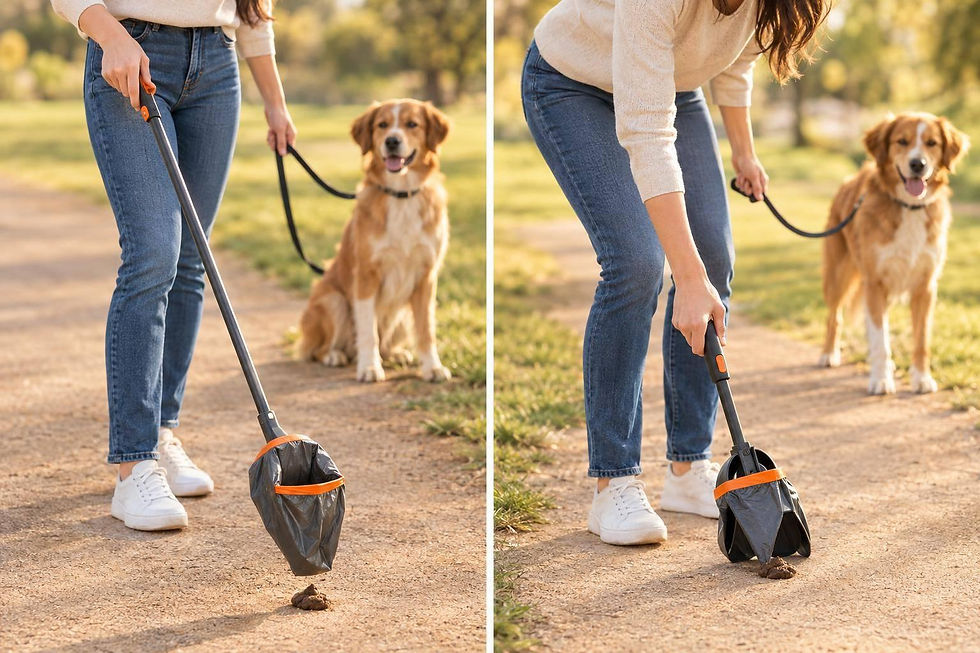
Scoop after each use and check the area daily. If you have multiple dogs, check more often so waste doesn’t get crushed or buried. Bag solids and feces-covered stones, then dispose of them according to local rules. Never hose waste into the ground or a storm drain. Wear gloves and wash your hands afterward.
After scooping, rinse lightly only if the surface dries fast. Stop if water pools. If the smell lingers, remove contaminated gravel and check for compaction or pooling.
If rinsing doesn’t control the smell, use a labeled cleaner rather than harsher products.
Choose Odor Treatments Safe for the Surface
Choose an enzymatic cleaner labeled for pet areas and gravel. Remove visible waste, test a small patch, and follow the label’s dilution, contact-time, rinsing, and pet-return directions. Keep dogs away until the label allows them back and the surface is dry. Never mix products or assume household acids, bleach, disinfectants, or essential oils are suitable substitutes.
For deodorizers, use only a pet-safe product labeled for gravel, and follow its directions exactly.
Follow a Gravel Maintenance Schedule
Follow this schedule to keep the area sanitary without overworking the surface.
Frequency | What to do |
Daily | Check for buried waste, remove feces-covered stones, and look for pooling and odor. |
Weekly | Check drainage after rain, rake lightly only after removing waste, and decide whether rinsing is needed. |
As needed | Treat odor, replace contaminated gravel, and fix drainage issues. |
Conclusion: Rounded Gravel, Good Drainage, Daily Scooping
The right gravel and base help keep the area usable, but consistent cleanup matters just as much. Choose smooth, rounded pea gravel only if your dog walks comfortably on it and won’t chew or swallow the stones.
Match the gravel depth to your base and drainage plan. Direct runoff away from buildings, neighbors, and storm drains.
Scoop at least daily, and rinse only when the surface and drainage can handle the water. If odors linger, waste is usually trapped or drainage isn’t working.
Scheduled service can support daily scooping, but it doesn’t replace it. For scheduled cleanup in greater Houston, Tomball, and nearby areas, contact Doody Bug Poop Scooping for weekly, twice-weekly, or one-time service and yard deodorizing.
FAQs
How do I train my dog to use gravel?
Lead your dog on a leash to the gravel potty area for each bathroom break, including in the morning and after meals. Use a cue like “Go potty,” and reward them right away with praise or a treat when they use the spot.
Most dogs get used to the routine within 4 to 8 weeks with steady, positive reinforcement. Keep the area clean, familiar, and inviting so your dog wants to return.
How often should I replace potty-area gravel?
Potty-area gravel doesn’t need replacing on a fixed schedule. Instead, watch for odors that won’t go away. If smells linger after regular scooping, rinsing, and enzymatic cleaning, the gravel has become saturated.
Rake out and replace the affected gravel. Clean the base underneath and check that it drains properly before adding new gravel. Never add new gravel over a dirty base - you’ll trap waste and bacteria underneath.
Why does my gravel still smell after cleaning?
The odor is likely coming from the base beneath the stones. Liquid waste can collect there and leave residue that starts to smell again when exposed to moisture or humidity.
If regular rinsing and enzyme treatments aren’t helping, you may need to remove the saturated material, clean the base, check that it drains properly, and refill with new gravel. Never add new gravel over a dirty base. That traps the odor underneath.


Comments