
How Often to Scoop Poop for Multiple Dogs

If you have more than one dog, I’d scoop poop every day in most cases. That’s the safest way to keep smell, germs, pests, and grass damage under control. With 2 dogs, I’d aim for 2 to 3 times per week if the yard is medium-sized. With 3+ dogs, a daily schedule is usually the right call.
Here’s the short version:
Daily: best for 3 or more dogs, small yards, turf, patios, or yards used by kids
2–3 times per week: often works for 2 dogs in a medium yard
Weekly: only a bare-minimum option for 1 dog in a large yard
Hot weather and rain mean you should scoop more often
Dog waste can carry E. coli, Salmonella, Giardia, and worms
Waste left on the ground can burn grass, draw flies and rodents, and make odor worse
A simple routine works best: use a long-handled scooper, walk the yard in the same pattern, bag waste right away, and rinse high-use spots. If you wait too long, cleanup takes more time and the yard gets harder to keep clean.
This guide breaks down the best schedule, when to tighten it, and how I’d keep a multi-dog yard under control.
POOP SCOOPING FOR MY THREE BIG DOGS ! WHAT HAPPENS ?!
sbb-itb-1f9eab4
Choose the Right Scooping Schedule for Your Household
Pick the lightest schedule that still keeps waste from piling up. The goal is simple: match your cleanup routine to how many dogs you have and what kind of yard you’re dealing with.
Daily, 2 to 3 Times Per Week, or Weekly: Which Schedule Fits
Here’s the practical range at a glance.
Schedule | Dog Count | Yard Size | Odor Control | Health Risk | Owner Effort |
Daily | 3+ dogs | Small / Urban | Excellent | Lowest | High |
2–3x Weekly | 2 dogs | Medium / Family | Good | Moderate | Medium |
Weekly | 1 dog | Large / Acreage | Fair | Higher | Low |
If you have three or more dogs using a small backyard, daily scooping is usually the best fit. Waste builds up fast in a tight space, and smell can show up sooner than most people expect.
With two dogs in a medium-sized family yard, a 2 to 3 times per week routine often works well. It keeps the space usable without turning cleanup into a daily chore.
A weekly schedule works only in a narrower case: one dog and a large yard. Even then, it’s more of a minimum than an ideal setup.
When Children, Turf, or Outdoor Seating Require a Tighter Schedule
Some yards need a tighter routine, even if the dog count is low. Children, turf, patios, decks, and seating areas get more foot traffic, so waste needs to be picked up sooner.
Think about how the yard is used. A backyard that doubles as a play area or hangout spot can’t handle the same schedule as a big open lot that nobody walks across much.
Adjust Your Schedule for Summer Heat and Heavy Rain
Weather changes the math. Hot days, heavy rain, and damp ground usually mean you need to scoop more often. Heat makes odor show up faster, and wet conditions can make the mess spread or stick around longer.
If sticking to a tighter routine is tough, Doody Bug Poop Scooping offers weekly and twice-weekly service, one-time cleanups, and deodorizing treatments in greater Houston and Tomball.
Once you settle on a schedule, the next step is turning it into a repeatable routine so it doesn’t feel like a hassle.
Follow a Simple Scooping Routine That Works
After you decide how often to scoop, stick with the same routine each time. That keeps cleanup fast and easy to repeat. The goal isn't to make it fancy. It's to make it automatic.
Use the Right Tools and Walk the Yard in a Set Pattern
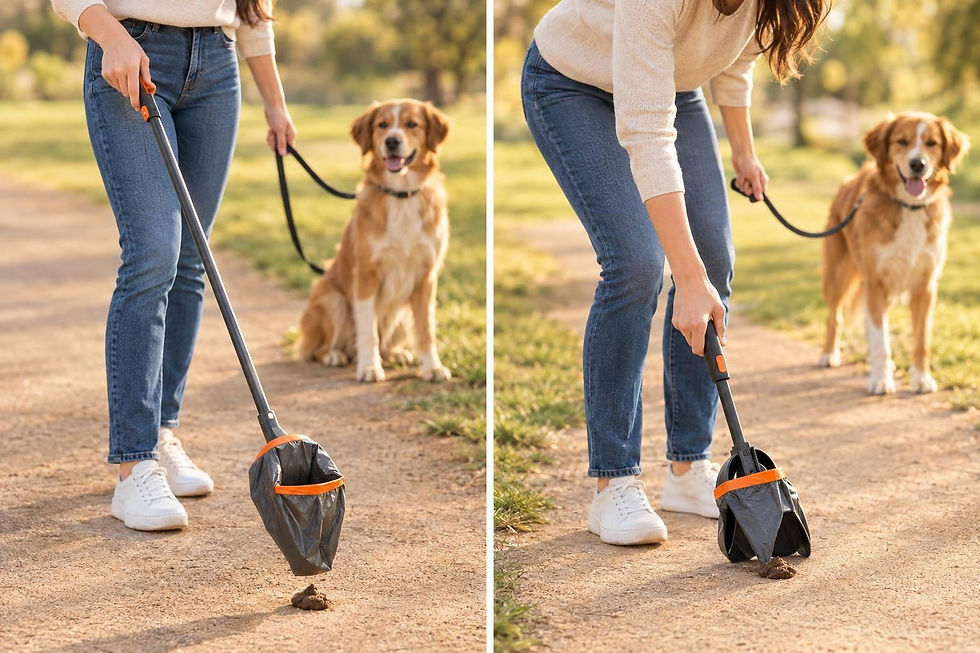
Use a long-handled scooper, waste bags, and a lidded trash bin. A long-handled scooper helps you stay upright and move through the yard faster, which matters in a multi-dog yard where waste can pop up in several places.
Walk the yard the same way every time, like a grid or a perimeter loop, so you don't miss any piles. In a multi-dog yard, a set route helps you catch waste in high-traffic spots that are easy to skip. This kind of step-by-step walk matters even more when waste piles up fast.
Once you finish your pass through the yard, bag the waste and clean your tools right away.
How to Bag, Dispose, and Sanitize Correctly
Bag the waste, tie the bag, and place it in a lidded trash bin.
If you're doing a weekly cleanup, rinse your scooper and sanitize it before putting it away.
Match the Cleanup Method to Your Schedule
Your cleanup method should line up with how often you scoop.
Cleanup Type | Time per Session | Tools Needed | Steps Included |
Daily Pass | 5–10 mins | Long-handled scooper, waste bags | Quick walk of high-traffic areas; bag and bin waste - best for small yards, 3+ dogs, or child-use areas |
Twice-Weekly | 15–20 mins | Scooper, bags, lidded bin | Systematic grid-pattern walk; perimeter check - best for average yards with 2 dogs |
Weekly Cleanup | 30+ mins | Scooper, bags, sanitizer, hose | Full yard grid walk; tool sanitization; rinsing patios/decks |
Shorter scoop intervals make each session faster because waste has less time to build up.
Reduce Odor, Pests, and Contamination Between Cleanups
After scooping, pay extra attention to the spots your dogs use over and over. Urine and leftover residue can hang around even after solid waste is gone, especially in favorite bathroom areas. Start with a rinse, then treat hard surfaces where odor tends to stick.
Rinse and Treat the Areas Where Waste Collects Most
Most dogs go back to the same places, which means those spots get dirty faster than the rest of the yard. Rinse them with a garden hose after scooping to dilute urine and wash away residue before it settles in. On hard surfaces, use a pet-safe enzymatic cleaner. It works well on concrete and patios, where smells tend to linger.
Extra Care for Turf, Patios, and Small Yards
The type of surface makes a big difference in how fast odor builds up. Grass usually handles waste better because the soil absorbs and filters part of it, but urine spots still need regular rinsing. Artificial turf, concrete, and gravel hold heat and odor longer. They also trap waste between fibers, cracks, or stones, so they need more frequent rinsing and enzymatic cleaning to stay under control.
Small yards make the issue worse because everything is concentrated in a tighter space. That’s why daily scooping and steady rinsing matter even more when you don’t have much room.
When a Scheduled Service Helps Keep the Yard Under Control
Sometimes life gets in the way. Busy weeks, travel, or just dealing with waste from several dogs can throw off the routine. Doody Bug Poop Scooping serves greater Houston, Tomball, and nearby areas with scheduled waste removal, one-time cleanups, and deodorizing treatments that help keep multi-dog yards under control.
Conclusion: Set a Schedule and Stick to It
Daily is the best default. If that feels like too much, twice a week is the next best option.
Some yards need more frequent cleanup. High-use yards and hard surfaces need a tighter routine because waste piles up fast in smaller, heavily used spots. Hot weather can make things worse. And when waste dries on concrete or similar surfaces, it gets much harder to remove.
What matters most is consistency. Scoop on a set schedule, rinse high-use areas on a regular basis, and scoop before rain to cut down on runoff.
If staying on top of a multi-dog yard is tough, Doody Bug Poop Scooping offers weekly and twice-weekly scheduled cleanups, plus deodorizing treatments. It’s a practical choice for keeping cleanup on track.
FAQs
How do I know if I need to scoop more often?
You may need to scoop more often if waste starts piling up between cleanups or you notice odors that stick around. Dog poop can spread bacteria and parasites, and it can draw pests into your yard.
If once-a-day cleanup still isn't enough, scoop more often. For homes with more than one dog, a set weekly or twice-weekly professional scooping service can help keep the yard clean and easier to deal with.
What if my dogs use the same bathroom spot?
When more than one dog uses the same area, waste piles up fast. And once that happens, bacteria, parasites, and odors can build up just as fast. That’s why prompt, regular scooping matters. It helps cut down the chance of waste soaking into the soil or spreading germs around your yard.
If staying on top of cleanup has become a hassle, Doody Bug Poop Scooping offers scheduled cleanups and deodorizing treatments in the greater Houston and Tomball areas to help keep your yard hygienic.
When should I hire a poop scooping service?
Consider hiring a service like Doody Bug Poop Scooping if your schedule is packed or cleaning up after several dogs starts to feel like too much.
It can also help when smells stick around on concrete, decks, or in the yard even after you clean it yourself. A weekly or twice-weekly visit can help keep the area clean and pest-free for your family and pets.


Comments