How to Sanitize Dog Waste Tools Safely

A pooper scooper that looks clean can still carry germs and parasite eggs. If I want dog waste tools to be safer to handle, I need to do three things every time: wash off waste, use a disinfectant on hard, non-porous parts, and let the tool dry all the way before I store it.
Here’s the short version:
Rinse after each use
Scrub with soap and water
Disinfect with bleach mix or a label-approved product
Keep the surface wet for at least 1 minute if no label time is given
Dry fully to help stop rust and leftover moisture
Store tools away from kitchens, dishes, pet bowls, and kids’ play areas
A few facts stand out. Some parasite eggs from dog waste can stay in the area for up to 4 years. And the CDC bleach mix for hard surfaces is 5 tablespoons per gallon of water or 4 teaspoons per quart. That’s why a quick rinse alone is not enough.
I’d use this routine for pooper scoopers, rakes, pans, buckets, and waste bins. I’d also clean more often if I had multiple dogs, dealt with diarrhea, or worked in muddy or wet conditions.
This article comes down to one simple point: clean first, disinfect next, then dry and store the tool the right way.
How To Sanitize Dog Poop Removal Equipment
sbb-itb-1f9eab4
Set Up a Safe Cleaning Area and Gather Supplies
Before you clean any tool, set up a separate work area that’s easy to rinse. A concrete driveway, patio, or utility sink works well. Just make sure it’s not a spot used for food prep. Keep rinse water and residue away from kitchens, eating areas, and places where kids or pets play.
Pick a location with good drainage so dirty water doesn’t sit there. It also helps to leave a clean space nearby where tools can air-dry after rinsing.
If you’re working outside, a garden hose with an adjustable spray nozzle does the job well. Indoors, a laundry room utility sink is a solid choice. In both cases, make sure there’s plenty of airflow, especially if you’re using disinfectants.
Tools and Protective Gear You Will Need
Get everything ready before you begin. That way, you’re not stopping halfway through to touch door handles, cabinets, or other surfaces with dirty gloves.
You’ll want:
Disposable gloves
Garden hose or utility sink - your main water source for rinsing
Dish soap or mild detergent
Dedicated scrub brush - label it and store it separately; never use it on dishes
Disposable towels and a lined trash bag - for debris and used gloves
Optional: safety glasses or goggles - a smart idea if you’re using a high-pressure spray or working with bleach
If you’re cleaning several tools at once, a plastic utility tub can help keep soaking water and splatter in one place.
Disinfectants That Work on Hard, Non-Porous Tools
These products are only for hard, non-porous tools like the scoopers, rakes, pans, buckets, and bins covered in this guide. Use either a diluted bleach solution or a label-approved pet disinfectant on those surfaces.
For bleach, the CDC recommends mixing 5 tablespoons (⅓ cup) per gallon of room-temperature water, or 4 teaspoons per quart. Make a fresh bleach solution each time you clean. If you use a label-approved pet disinfectant, follow the product label for dilution and contact time.
Never mix bleach with ammonia or other cleaners. Use bleach in a well-ventilated area, and keep children and pets away until the tools have been rinsed and are fully dry. If the product label does not list directions, CDC guidance says to keep the surface wet for at least 1 minute for disinfection.
Once your supplies are set out, you can move right into washing and disinfection.
How to Clean and Disinfect Pooper Scoopers Step by Step
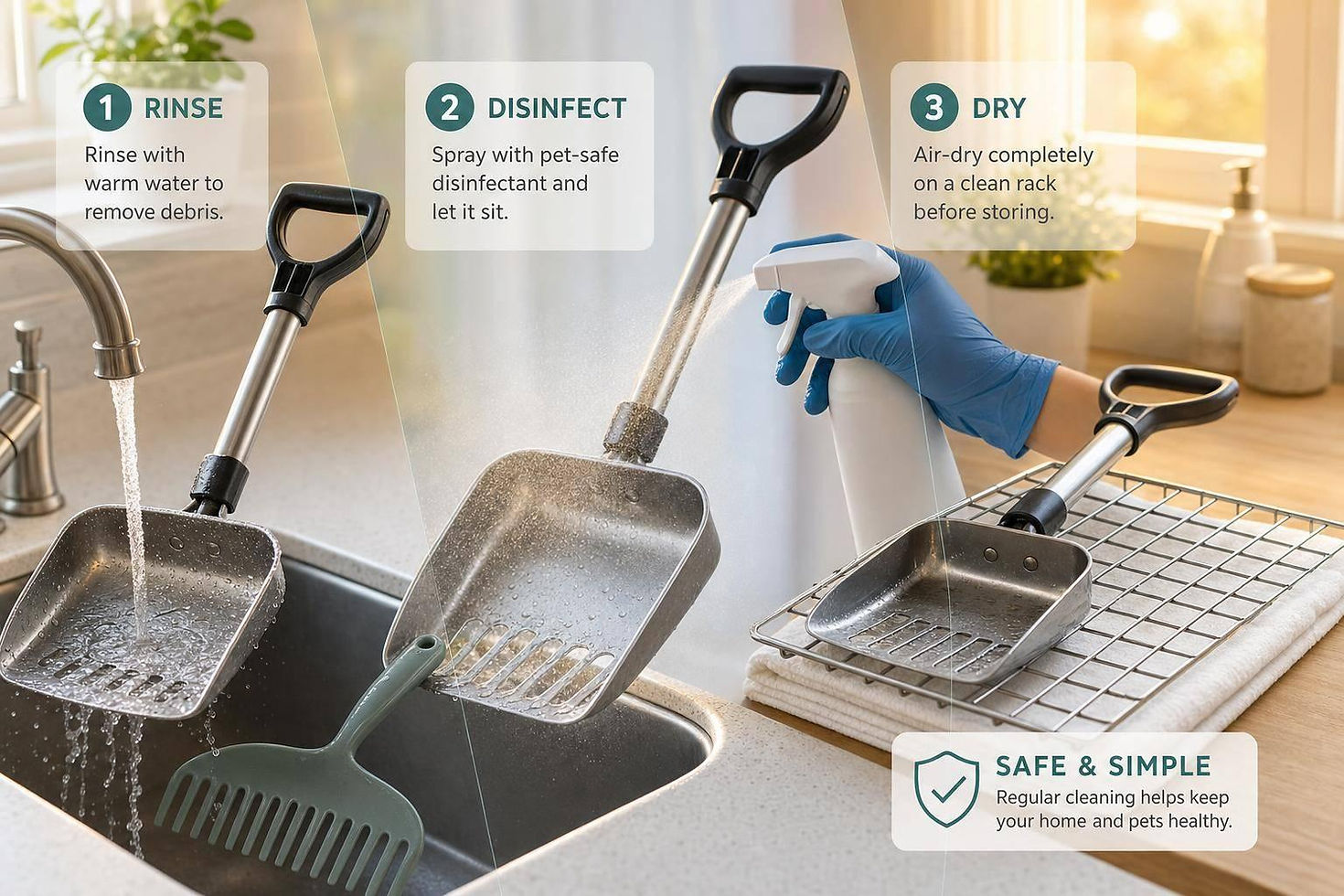
Once your supplies are ready and your cleanup area is set, you can run through this three-step process after each yard pickup. It works for metal and plastic scoopers, rakes, dustpans, and collection buckets.
Step 1: Remove Waste, Rinse, and Wash with Soap
Start by wiping off any stuck waste with a paper towel or disposable wipe. Bag it, then throw it into an outdoor trash can. After that, rinse the tool with a hose or utility sink to wash away anything left behind.
Next, scrub the entire tool with soapy water and your dedicated brush. Pay close attention to hinges, teeth, seams, corners, and bucket lips. Those tight spots tend to hold organic matter and debris, which can get in the way of the disinfectant in the next step. Rinse well with clean water until all soap and debris are gone.
Step 2: Apply Disinfectant and Allow Proper Contact Time
Apply your disinfectant by spraying, wiping, or soaking the tool briefly. Then keep the surface wet for the full contact time listed on the label. That part matters. If the tool dries too soon, the disinfectant may not do its job.
If you're cleaning metal tools, keep bleach contact short, then rinse and dry them right away to help prevent rust. It also helps to clean one tool at a time so each one stays wet for the full contact time.
Step 3: Rinse, Dry, and Inspect the Tool
Rinse the tool if the label says to do so, then let it air-dry all the way before storing it. Putting away a damp tool can trap moisture in joints and around bucket rims, and that can lead to rust.
Once it's dry, give it a quick check. Look for rust on metal, cracks in plastic, and hinges that feel stiff or loose. Test any moving parts, tighten loose hardware, and repair or replace tools that are worn or damaged.
When everything looks good, put the tool back in its dedicated storage spot.
Prevent Cross-Contamination and Store Tools Correctly
Keep Waste Tools Separate from Other Household Items
After disinfection, make sure the tool doesn't pick up germs all over again. Never rinse pooper scoopers or waste buckets in the kitchen sink. Sink splashes can spread germs to nearby surfaces, including counters, sponges, and dishes.
Keep waste tools away from food bowls, garden tools, and household cleaners. If those items get mixed together, E. coli, Salmonella, and parasites can end up on surfaces that people and pets touch all the time.
A simple setup works best: use a clearly labeled, lidded plastic tote marked "Dog Waste Tools Only" and keep it in a garage, shed, or fenced yard area. If you're short on floor space, hang scoopers and rakes upright on a dedicated hook or one section of a pegboard so they stay separate. Color-coding the tools used for dog waste cleanup also makes them easy to spot at a glance.
Once you've got storage sorted out, the next step is setting a simple cleaning routine.
How Often to Sanitize and Where to Store Tools
Rinse tools after each use. Disinfect them at least once a week, and do it more often after illness or heavy soiling.
Store tools in a covered, ventilated spot, like a garage corner with good airflow or a shaded area under an awning. That helps keep moisture from building up and slows rust on metal parts.
Conclusion: Build a Simple Routine for Cleaner Yard Care
Keeping dog waste tools clean doesn't have to be a big chore. The routine is pretty simple: remove waste, wash with soap and water, disinfect for the label contact time, rinse if required, dry fully, and store the tools away from household surfaces.
That matters because germs and parasite residue can stick around between uses. A simple cleanup after each job helps cut that down. Use the routine every time.
For scheduled cleanup in greater Houston, Tomball, and nearby areas, Doody Bug Poop Scooping offers weekly, twice-weekly, and one-time waste removal, plus yard deodorizing, with tools sanitized between visits.
FAQs
Can parasite eggs survive on tools?
Yes. Parasite eggs can survive on tools, including dirty pooper scoopers and other waste-removal equipment.
Parasites such as roundworms, hookworms, and Toxocara canis are tough. They can live in soil for up to seven years. So if you don’t clean and sanitize your tools after use, those pathogens can stick around and spread to other parts of your yard.
Is bleach safe for metal scoopers?
Bleach is generally not recommended for metal tools. It can corrode some materials, and if any residue is left behind, it may create a risk for pets.
For pooper scoopers, it's safer to use pet-safe products made for waste sanitation, such as Wysiwash or KennelSol. They can help sanitize the tool without the harsher risks that come with bleach.
What if I don’t have a utility sink?
If you don’t have a utility sink, you can still sanitize your tools safely with a garden hose. Just do it outside, away from busy areas and any runoff.
If you’d rather not handle tool cleaning yourself, Doody Bug Poop Scooping offers scheduled yard cleanups across the greater Houston and Tomball areas. The team also sanitizes tools between visits to help keep your home environment hygienic.


Comments