
How Dog Waste Harms Local Waterways

Dog waste does not stay put. When rain or sprinklers hit it, that waste can wash into storm drains and then into creeks, bayous, ponds, and bays with no treatment.
I’d sum it up like this: pick it up fast, bag it, trash it, and clean the yard before rain. That simple habit helps cut bacteria, parasites, nitrogen, phosphorus, and ammonia that can foul water, feed algae, and harm fish, pets, and people. And the amount adds up fast: a 50-pound dog makes about 200 pounds of waste each year.
Here’s the short version:
Dog waste is a water pollution source.
Storm drains often send runoff straight to local waterways.
Waste can carry bacteria and parasites.
It also adds nitrogen and phosphorus, which feed algae growth.
As algae breaks down, oxygen drops and fish can die.
Ammonia from waste can also hurt aquatic life.
Heavy rain in places like Houston can move waste fast.
The simplest fix is regular pickup, especially before storms.
One fact stands out: just 1 gram of dog feces can contain about 23 million fecal coliform bacteria. So if waste sits in a yard, park, or along a sidewalk, the next rain can turn a small pet mess into a local water problem.
Dog waste threatens U.S. water quality, officials warn
sbb-itb-1f9eab4
What Dog Waste Adds to Waterways
After runoff moves waste off lawns and sidewalks, the problem shifts to the water. Once dog waste reaches creeks, ponds, rivers, or stormwater systems, it brings pathogens and nutrients that harm water quality.
Bacteria and Parasites Found in Dog Waste
The first issue in waterways is contamination. Dog feces can carry bacteria, parasites, and other pathogens that pollute the water and the bottom sediment. That can make the area unsafe for swimming or fishing.
Some of these pathogens don’t disappear fast, either. They can survive in soil and sediment for years, which means the risk can stick around long after the waste first washed in.
Nitrogen and Phosphorus That Feed Algae Growth
Dog waste also contains high levels of nitrogen and phosphorus. When those nutrients enter the water, they act like fertilizer and can trigger an algal bloom.
Here’s where it gets worse: when the algae die and start to break down, that process uses up dissolved oxygen in the water. The result can be low-oxygen dead zones that kill fish and other aquatic life. As the waste breaks down in water, it also releases ammonia, which is directly toxic to aquatic life.
How Dog Waste Reaches Storm Drains and Streams
How Rain and Sprinklers Move Waste Downhill
Once dog waste is left on the ground, rain or sprinkler water can push it straight into the storm-drain system. Waste on grass, patios, or driveways starts to break apart fast, and runoff can carry it off before you notice. That shallow flow of water moves across yards, sidewalks, and driveways, picking up bacteria, parasites, and dissolved nutrients as it goes.
From there, the path is simple. Water moves downhill the easy way: across the lawn, into the street gutter, and then into the nearest curb inlet or roadside ditch. In places like greater Houston, where heavy thunderstorms hit often, that whole chain can happen in minutes.
Hard surfaces make the problem worse. Patios, concrete dog runs, and driveways don't soak up water, so waste on top of them washes away fast. A lawn sprinkler can do a smaller version of the same thing, nudging waste residue toward the street every time it runs. And even when the solid waste seems gone, runoff can still carry leftover bacteria and nutrients.
Storm Drains Often Skip Water Treatment
This matters for one big reason: storm drains usually don't send water to a treatment plant. In many U.S. cities, stormwater flows through a separate storm-drain system, not the sanitary sewer system that carries household wastewater for treatment.
Once runoff drops into a curb inlet, it enters an underground pipe that often sends it straight to the nearest creek, bayou, lake, or bay. There's usually no filtering or disinfecting first. So bacteria, parasite eggs, and dissolved nutrients from dog waste can move from a yard to local waterways with very little in the way.
How Polluted Water Affects People, Pets, and Wildlife
Health Risks from Contaminated Water and Sediment
Once dog waste gets into the water, the problem changes fast. It’s no longer just runoff. It becomes a direct health and habitat issue.
When waste settles in creeks, ponds, or drainage ditches, pathogens can stay in the sediment for years. So even after the waste itself is gone, the risk can stick around. A child wading in drainage water or a dog drinking from shallow water can still be exposed long afterward.
That exposure can increase the risk of infection for both people and pets.
Algae Growth, Low Oxygen, and Damaged Aquatic Habitat
Dog waste doesn’t just affect people and pets. It also throws off the aquatic food chain.
Extra nutrients speed up algae growth. Then, as that algae breaks down, it uses up oxygen in the water and releases ammonia. The result is damaged habitat, along with fewer healthy fish and other aquatic species.
The good news is simple: regular waste pickup can cut these risks by a lot.
How Pet Owners Can Cut Down on Water Pollution
Pick Up Waste Right Away and Dispose of It Correctly
The main idea is simple: stop pet waste before rain moves it into storm drains.
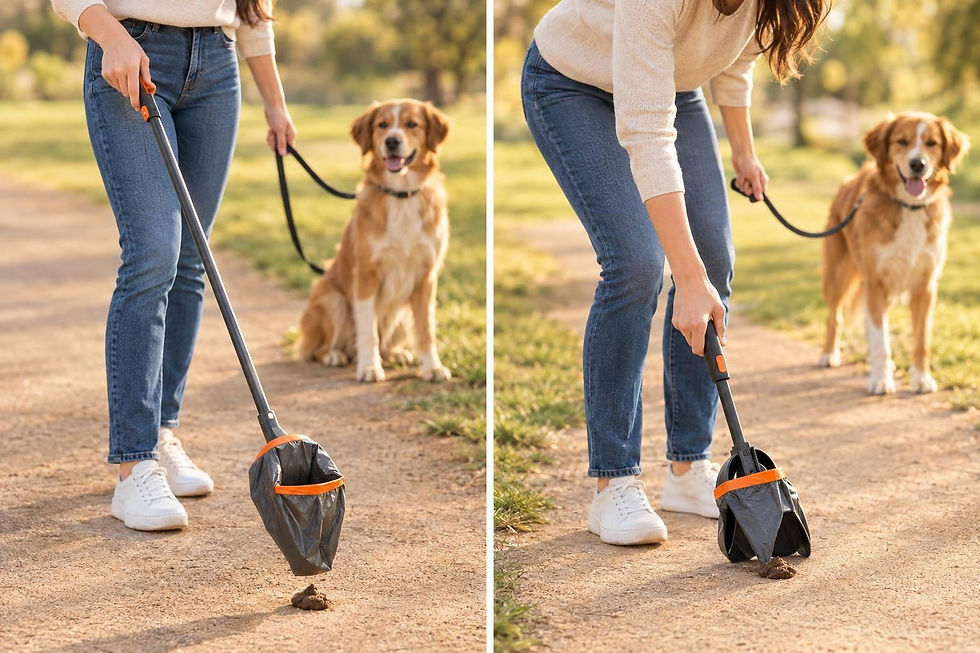
Pick up waste right away on walks and in the yard. A gram of dog feces can contain about 23 million fecal coliform bacteria. If it sits on the ground, the next rainstorm - or even a sprinkler cycle - can wash those pathogens into a nearby creek or bayou.
Once you bag it, put it in a lined, covered trash can. If local rules allow it, flush unbagged waste so it goes to a sewage treatment plant. And never toss waste bags into storm drains or leave them near ditches. In Houston, storm drains flow straight to bayous with no treatment at all.
Clean the Yard Before Rain Starts
Timing makes a big difference because runoff can move waste fast once the rain starts.
Before a forecasted heavy rain, do a quick sweep of your yard. Pay extra attention to fence lines, low spots, and downhill areas. Those are the places where waste tends to build up and where runoff usually travels.
For busy households, especially ones with multiple dogs, staying on top of this every week isn't easy. Doody Bug Poop Scooping offers scheduled backyard cleanups in the greater Houston and Tomball area, which helps keep yards on a set routine and leaves less waste available to wash into local drainage systems.
Use Deodorizing and Sanitary Yard Treatments When Needed
Even after you remove solid waste, bacteria and odors can stick around in high-traffic dog areas like lawns, patios, decks, and artificial turf. Deodorizing and disinfecting treatments used after scooping can help cut down bacteria in those spots.
Doody Bug Poop Scooping also sanitizes tools between every visit to help prevent cross-contamination between yards. One thing to avoid: applying treatments right before heavy rain. Runoff can carry those chemicals into storm drains and surface water. These treatments do their job best after the waste is already gone.
Conclusion: Cleaner Yards Help Protect Local Water
Dog waste left on the ground doesn't just sit there. Rain or sprinklers can wash it into storm drains, and from there it can end up in bayous and bays without any treatment. That's why regular pickup is one of the simplest ways to stop pollution before it starts.
The fix is simple: pick up waste on a steady schedule, especially before rain. That cuts off the problem at the source. And it adds up fast. An average 50-pound dog produces roughly 200 pounds of waste per year, so staying on top of cleanup makes a clear difference.
If you want steady help with cleanup, Doody Bug Poop Scooping offers weekly and twice-weekly service in the greater Houston and Tomball area. Scheduled visits help keep waste out of storm drains and support cleaner water downstream.
FAQs
Why is dog waste considered water pollution?
Dog waste can turn into water pollution fast. When rain hits waste left in yards, on sidewalks, or in parks, it can wash that mess into storm drains. From there, the runoff often moves untreated into nearby creeks, rivers, and bays.
And it’s not just unpleasant. That runoff can carry harmful pathogens, including parasites and bacteria like E. coli and salmonella. It also adds extra nitrogen and phosphorus to the water, which can feed algal blooms and reduce oxygen levels. That puts fish and other aquatic life in a bad spot.
Can sprinklers wash dog waste into storm drains?
Yes. Sprinklers, rain, and other moisture can wash dog waste off lawns, sidewalks, and other surfaces and into storm drains.
Once that happens, the runoff can carry fecal bacteria, parasites, and nutrients like nitrogen and phosphorus into nearby creeks, rivers, and lakes. In many cases, that water reaches local waterways without treatment.
Cleaning up dog waste on a regular basis helps cut down on this kind of pollution.
What’s the best way to dispose of dog waste?
The most reliable and hygienic way to deal with dog waste is simple: pick it up often and throw it in the trash.
Flushing can work in some cases, but only if you don't have a septic system and your local wastewater rules allow it. And one thing is non-negotiable: never flush the bag.
Home composting is usually discouraged. The main reason is that most home compost setups don't get hot enough to kill harmful pathogens.


Comments