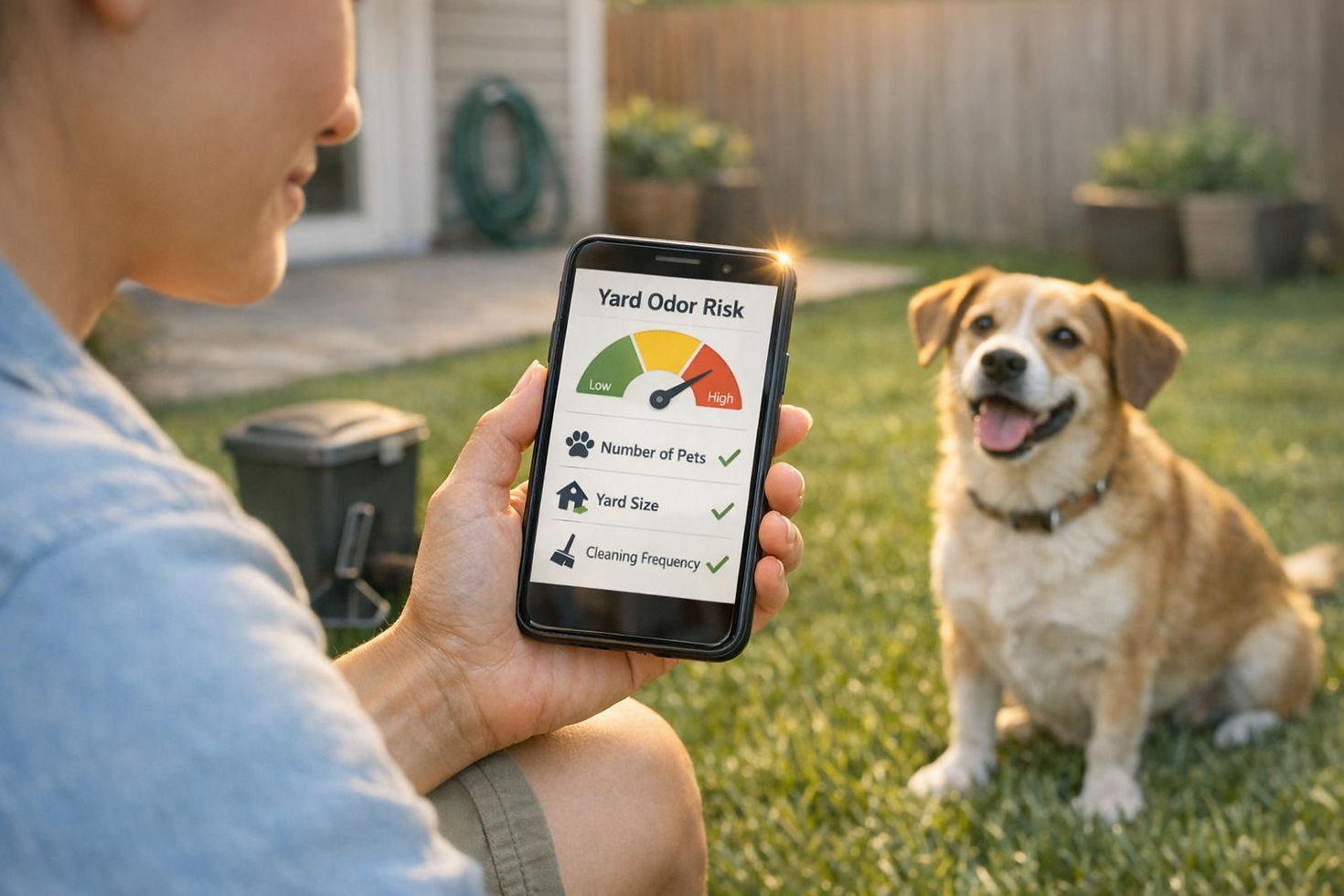
Yard Odor Reduction Checker

Keep Outdoor Pet Smells Under Control
A fresh yard is easier to enjoy, and it’s much more welcoming for family, guests, and pets. A Yard Odor Reduction Checker helps you quickly understand what may be causing persistent smells outside. Things like the number of pets, the size of the yard, and how often waste is removed can all make a noticeable difference.
Why yard odors build up
Pet waste, urine spots, warm weather, and poor airflow can all contribute to lingering odor. Smaller yards tend to concentrate smells faster, especially when more than one animal uses the same area. Even mild odor can turn into a bigger issue if cleanup is inconsistent.
A simple way to spot odor risk
This tool reviews a few basic details and turns them into a clear risk level with useful next steps. Instead of generic advice, the Yard Odor Reduction Checker points toward practical actions such as more frequent cleanup, outdoor-safe odor neutralizers, or improving ventilation around enclosed spaces.
Smarter solutions for a fresher yard
If you want a cleaner-smelling outdoor space, a quick pet yard odor check can help you act before smells become harder to manage. Small changes in routine often lead to the biggest improvement over time.
FAQs
How does the tool decide whether my yard has a low, medium, or high odor risk?
The tool looks at the combination of conditions that usually drive outdoor pet odors: how many or what type of pets use the yard, how much space is available, how noticeable the smell already is, and how often waste is cleaned up. For example, a small yard with multiple pets and rare cleaning is more likely to trap odors than a large yard cleaned daily. It’s a practical estimate, not a lab test, but it gives you a useful starting point.
Can this help if my yard already smells strongly of pet waste or urine?
Yes. If the current odor level is already strong, the tool will flag a higher risk and focus on solutions that make sense right away, such as cleaning more often, treating affected spots, and using odor-neutralizing products designed for outdoor pet areas. It won’t replace deep cleaning or drainage fixes when those are needed, but it can point you toward the most helpful next steps.
Are the recommendations different for dogs, cats, and multiple pets?
They can be. Different pet setups affect yard odors in different ways. A single dog in a large yard may need basic cleanup and spot treatment, while multiple pets in a smaller space often need more frequent waste removal, better airflow, and a more structured cleaning routine. The tool is designed to turn those input differences into advice that feels more relevant to your situation.


Comments